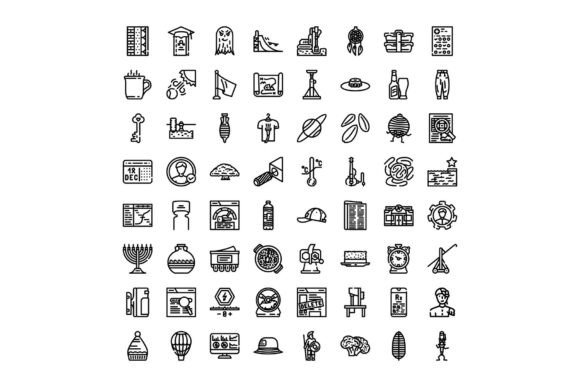
Exploring the Utility of Flat Black Line Vector Icons in Modern Design
Flat black line vector icons have become a staple in the world of digital design, offering a clean, minimalist aesthetic that complements a wide range of projects. Whether used in web interfaces, mobile apps, or print materials, these icons provide a versatile and scalable solution for designers aiming to convey clarity and professionalism. A well-curated collection of flat black line vector icons can serve as a foundational asset for both individual creators and design teams working across industries.
Understanding the Characteristics of Flat Black Line Icons
At their core, flat black line icons are defined by their simplicity. They typically lack gradients, shadows, and other complex effects, relying instead on clean outlines and uniform strokes to represent objects, actions, or abstract concepts. This design philosophy aligns with modern trends in user interface and user experience design, where minimalism and clarity are prioritized to reduce cognitive load and improve usability.
Vector formats allow these icons to scale without losing quality, making them ideal for responsive design. Unlike raster images, which become pixelated when enlarged, vector graphics maintain their sharpness across all screen sizes and resolutions. This scalability is particularly important in today’s multi-device environment, where content must adapt seamlessly to smartphones, tablets, and desktop displays.
Advantages of Using a Diverse Icon Collection
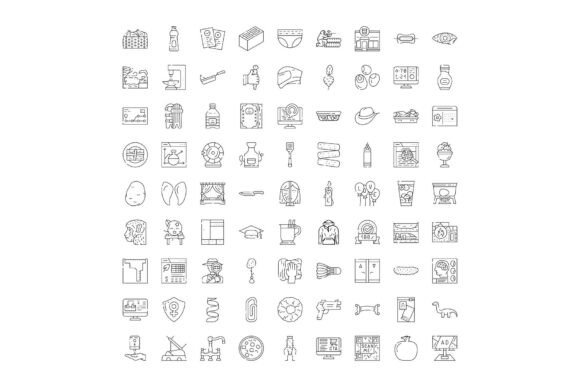
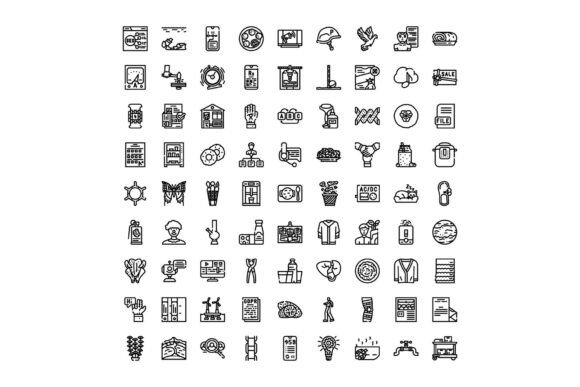
A large collection of diverse outline vector icons covering various objects, elements, and symbols offers significant advantages. Designers can find icons that represent not only common functions—such as search, settings, and notifications—but also niche or industry-specific elements. This breadth of coverage allows for greater flexibility in visual communication, enabling designers to accurately depict complex ideas through intuitive graphical representations.
- Consistency: A unified icon set ensures visual harmony across a project, contributing to a cohesive brand identity.
- Efficiency: Ready-made icons save time compared to creating custom graphics from scratch.
- Accessibility: Simple, high-contrast icons are often easier to interpret, especially for users with visual impairments.
These benefits are particularly relevant in fast-paced development environments where time-to-market is critical. Having access to a comprehensive library of flat black line vector icons streamlines the design process and supports rapid prototyping.
Use Cases Across Industries and Platforms
The versatility of flat black line vector icons makes them suitable for a wide array of applications. In web design, they are frequently used in navigation menus, buttons, and infographics to guide users and enhance visual hierarchy. Interface designers rely on them to create intuitive dashboards and control panels for software applications, where clarity and consistency are essential.
Graphic designers also find these icons valuable in print media, such as brochures, posters, and infographics, where they help break up text and illustrate key points. Educators and researchers may incorporate them into presentations or educational materials to simplify complex ideas and improve audience engagement. Even hobbyists and small business owners benefit from their accessibility, using them in social media graphics, branding materials, and marketing assets.
Selecting the Right Icon Set for Your Project
When choosing a collection of flat black line vector icons, several factors should be considered to ensure the icons meet the specific needs of the project. First, evaluate the breadth of the icon library. Does it include the symbols and objects relevant to your industry or application? A robust collection should cover a wide range of categories, from technology and communication to health, nature, and transportation.
Next, assess the design style. While all flat black line icons share a minimalist aesthetic, variations in stroke thickness, detail level, and overall proportions can affect how well they integrate with your existing design system. Consistency in style is key to maintaining a professional appearance.
Licensing is another important consideration. Make sure the icon set you choose is available under a license that aligns with your intended use—whether personal, commercial, or open-source. Some collections may require attribution or have usage restrictions, so it’s essential to review the terms carefully before implementation.
Integrating Icons into Design Workflows
Incorporating flat black line vector icons into a design workflow can vary depending on the tools and platforms being used. Most modern design software, such as Adobe Illustrator, Sketch, and Figma, supports vector file formats like SVG and EPS, allowing for easy import and customization. Designers can adjust stroke width, color, and other attributes to match the overall visual style of a project.
For developers, integrating icons into websites or applications often involves embedding SVG files directly into HTML or using icon font libraries. SVGs offer the advantage of being editable with CSS and JavaScript, enabling dynamic interactions and responsive design features. Additionally, many front-end frameworks and design systems include built-in support for icon libraries, streamlining the implementation process.
Trends in Icon Design and Usage
The design landscape is continually evolving, and iconography is no exception. While flat black line icons remain popular for their timeless appeal, new trends are emerging that expand on their foundational principles. For example, some designers are experimenting with subtle variations in stroke weight and line breaks to add visual interest without compromising clarity.
Another growing trend is the use of adaptive icons that change appearance based on context or user interaction. These icons can provide feedback or indicate state changes in user interfaces, enhancing the overall experience. Additionally, there is increasing demand for inclusive and culturally sensitive iconography that reflects diverse perspectives and avoids outdated stereotypes.
Staying informed about these trends can help designers make more informed decisions when selecting and implementing icon sets. However, it’s important to balance innovation with usability, ensuring that any stylistic choices enhance rather than hinder user understanding.
Conclusion
Flat black line vector icons continue to be a valuable resource for designers across disciplines. Their combination of simplicity, scalability, and adaptability makes them a reliable choice for a wide range of applications. Whether you're a professional designer, educator, developer, or small business owner, leveraging a well-curated collection of these icons can significantly enhance your visual communication efforts. By understanding the characteristics, advantages, and best practices associated with their use, you can make more informed decisions and create designs that are both functional and aesthetically pleasing.