Web Interface Design Icon Sets for Modern Creativity
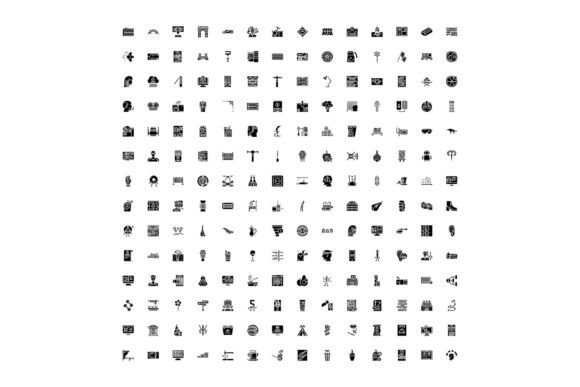
Icon sets are more than visual flourishes—they're essential tools for communication, navigation, and user engagement. The Web Interface Design Icon Set Collection offers a robust library of monochrome glyphs designed to support clarity, consistency, and adaptability across digital platforms. Whether you're building a mobile app, redesigning a website, or crafting interface elements, this collection provides a foundation that's both functional and flexible.
Why Monochrome Glyphs Matter
Monochrome icons strip away distractions, focusing on form and meaning. Their simplicity makes them highly adaptable to different color schemes, themes, and responsive layouts. The Web Interface Design Icon Set Collection embraces this minimalism while offering a wide range of universal symbols—from navigation arrows and user profiles to settings, shopping carts, and social media indicators.
These icons serve as a visual language that transcends cultural and linguistic boundaries. They guide users intuitively through interfaces, reducing cognitive load and improving accessibility. Whether you're designing for a global audience or a niche market, the clarity of monochrome glyphs ensures your message remains clear and consistent.
Applications Across Platforms
One of the most compelling aspects of the Web Interface Design Icon Set Collection is its versatility. These icons work seamlessly across:
- Responsive websites
- Mobile and desktop applications
- Dashboard interfaces
- E-learning platforms
- Marketing materials and infographics
For example, a designer working on a financial dashboard can use the same icon set to represent income, expenses, and account settings—ensuring visual harmony and reducing development time. Similarly, a blogger can integrate these icons into a content management system to enhance post categorization and reader navigation.
Creative Possibilities and Customization
While the Web Interface Design Icon Set Collection is rooted in simplicity, it opens the door to creative reinterpretation. Designers can layer, recolor, animate, or combine icons to suit specific brand identities or interaction patterns. Consider using a single icon as a focal point for a call-to-action, or arranging a series of icons in a timeline to guide users through a multi-step process.
Here are a few creative directions to explore:
- Dynamic hover effects: Use CSS or JavaScript to animate icons on hover or click, enhancing interactivity without overwhelming the user.
- Icon-based navigation menus: Replace traditional text menus with icon-driven navigation for a sleek, modern interface.
- Thematic icon variations: Adjust stroke weight or add subtle textures to icons to match seasonal themes or campaign aesthetics.
- Illustrative icon sets: Combine monochrome icons with hand-drawn illustrations to create a hybrid visual style that feels both modern and personable.
Designing for Different Audiences
The Web Interface Design Icon Set Collection supports a wide range of audiences and use cases. A startup targeting tech-savvy millennials might opt for clean, geometric icons that reflect innovation and efficiency. Meanwhile, an educational platform for young learners could adapt the same set with playful animations and bold colors to make navigation more engaging.
For accessibility, consider pairing icons with text labels or providing alternative text for screen readers. This ensures that all users—regardless of ability—can navigate your interface with confidence.
Project Ideas to Spark Inspiration
If you're looking to integrate the Web Interface Design Icon Set Collection into your next project, here are a few practical ideas to get started:
- Mobile app UI kit: Create a reusable UI kit that includes icons for navigation, actions, and status indicators.
- Website icon system: Build a consistent icon system for blog categories, navigation menus, and footer links.
- Interactive data visualizations: Use icons as data points or legend markers in charts and graphs.
- Print and digital marketing assets: Incorporate icons into brochures, social media graphics, and email templates for visual continuity.
Each of these projects benefits from a unified icon language that enhances usability and visual appeal. By leveraging the Web Interface Design Icon Set Collection, you can maintain consistency across formats while adapting to different design requirements.
Staying Organized and Consistent
When working with a large icon set, organization is key. Use a naming convention that reflects function or category, and store icons in a centralized design system or asset library. This makes it easier for teams to collaborate and ensures that everyone is working from the same visual vocabulary.
Consistency also extends to styling. Stick to a single stroke width, corner radius, and alignment standard across your icon set. If you need to customize icons, do so systematically—applying the same adjustments across all assets to maintain cohesion.
Final Thoughts: Making the Most of Icon Design
The Web Interface Design Icon Set Collection is more than a toolkit—it's a resource for building intuitive, visually compelling digital experiences. Whether you're a seasoned designer or just starting out, this collection empowers you to communicate clearly, design efficiently, and create interfaces that resonate with users.
By understanding the strengths of monochrome glyphs and exploring creative applications, you can elevate your design process and deliver results that are both functional and expressive. Let the Web Interface Design Icon Set Collection be your starting point for smarter, more inspired interface design.