Isometric Icons for Diverse Design Needs: A Practical Guide
Understanding Isometric Icon Collections
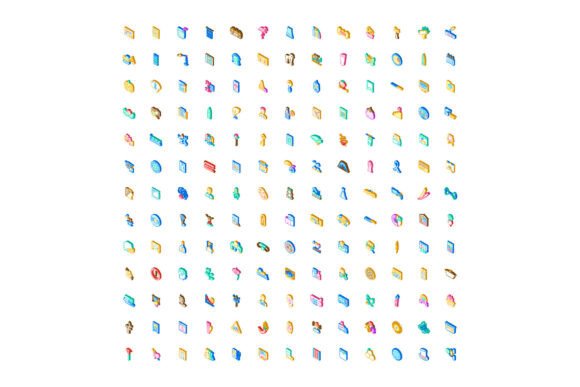
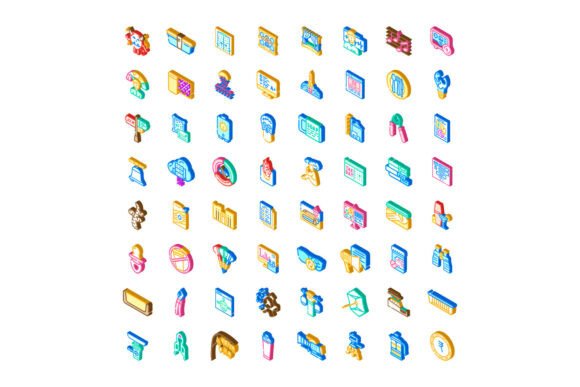
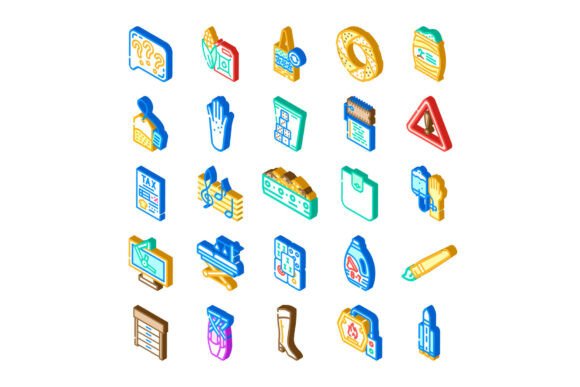
Various Isometric Icons Representing Dif refers to a design resource containing a wide array of isometric icons that illustrate everyday objects, digital elements, and abstract concepts. These icons are typically rendered in an isometric perspective, offering a 3D-like appearance while maintaining a flat, scalable format. They are commonly used in web design, user interfaces, and graphic presentations to enhance visual communication and improve user engagement.
Such collections are often created with versatility in mind, featuring icons that range from physical items like tools and electronics to abstract ideas like teamwork and innovation. Designed on a white background, they provide a clean, adaptable base that can be easily integrated into different design systems and workflows.
Why Designers Consider Isometric Icon Sets
Design professionals and content creators often seek out isometric icon sets due to their ability to convey complex ideas in a visually appealing and easily digestible format. These icons serve as visual metaphors that help users understand digital interfaces more intuitively. Whether used in dashboards, mobile apps, or marketing materials, isometric icons can significantly enhance the clarity and aesthetic quality of a design.
Additionally, these icon sets are especially valuable for projects that require a modern, cohesive visual language. Their isometric style provides depth without overwhelming the viewer, making them ideal for UI/UX design, infographics, presentations, and e-learning platforms. As visual storytelling becomes more central to digital communication, the demand for high-quality, expressive icons continues to grow.
Key Benefits of Using Isometric Icons
One of the primary advantages of Various Isometric Icons Representing Dif is their visual consistency. Since all icons in a set are created using the same stylistic rules—such as color palette, line weight, and perspective—they can be combined seamlessly within a single project. This consistency contributes to a professional, unified look without the need for custom illustration work.
Another benefit is scalability. Isometric icons are typically vector-based, allowing them to be resized without loss of quality. This makes them suitable for a wide range of screen sizes and resolutions, from mobile devices to large desktop displays. Furthermore, their modular nature makes them easy to customize, enabling designers to tweak colors, add shadows, or animate them as needed.
- Enhanced Visual Engagement: Adds depth and dimension to flat design layouts.
- Improved User Comprehension: Simplifies complex processes or abstract ideas through visual cues.
- Time and Cost Efficiency: Reduces the need for original illustrations or 3D modeling.
- Cross-Platform Compatibility: Works well across websites, apps, and printed materials.
Tradeoffs and Considerations
While isometric icons offer many benefits, they are not without limitations. One potential drawback is their visual complexity compared to flat or minimalist icons. In interfaces where simplicity and speed of recognition are critical—such as mobile navigation menus—isometric icons may appear too detailed or distracting.
Another consideration is file size. Although vector-based icons are scalable, some isometric designs may include intricate details that increase file size. This can affect website performance if not optimized properly. Designers should evaluate whether the added visual richness justifies any potential impact on load times or rendering performance.
Additionally, licensing can be a factor. While many isometric icon sets are available under standard design licenses, it's important to verify usage rights—especially for commercial applications or large-scale deployments. Some platforms may require attribution or restrict usage in certain contexts.
When Isometric Icons Are a Strong Fit
Isometric icon sets shine in scenarios where visual storytelling and depth are key. They are particularly effective in:
- E-learning Platforms: Helping explain processes or concepts through illustrated scenes.
- Data Visualization: Enhancing infographics and reports with engaging visual elements.
- Dashboard Interfaces: Providing intuitive representations of functions or metrics.
- Presentation Design: Making slides more dynamic and memorable.
Projects that benefit from a modern, illustrative style—such as SaaS dashboards, mobile apps, or branded content—can greatly benefit from the use of isometric icons. Their ability to blend realism with abstraction makes them a flexible tool for designers aiming to communicate ideas more effectively.
When Alternatives May Be Better
Despite their versatility, isometric icons may not always be the best choice. For applications that require minimalism, speed, or accessibility, simpler icon styles such as flat or line icons may be more appropriate. In highly functional interfaces where users need to process information quickly—like in enterprise software or mobile apps—simpler icons can offer better usability.
Additionally, for brands with a strict visual identity, isometric icons may not align with existing design language. In such cases, custom illustrations or icon sets tailored to brand guidelines may be more suitable. Designers should also consider the target audience; younger, more visually-oriented users may appreciate the depth of isometric icons, while older or less tech-savvy audiences might respond better to simpler visuals.
Making the Right Choice for Your Project
When evaluating whether to use Various Isometric Icons Representing Dif, consider the following factors:
- Design Goals: Do you need icons that are expressive and visually engaging, or do you prioritize clarity and simplicity?
- Target Audience: Will your users appreciate the illustrative style, or would they find it distracting?
- Technical Constraints: Are there limitations around file size, performance, or scalability?
- Licensing Requirements: Does the icon set allow for your intended use case?
- Brand Consistency: Do the icons align with your brand’s visual identity and tone?
Ultimately, the decision should be based on how well the icon set supports your design objectives and enhances the user experience. If visual richness and storytelling are central to your project, isometric icons can be a powerful asset. However, if simplicity, speed, or strict brand guidelines take precedence, exploring alternative icon styles may be more appropriate.
Conclusion
Various Isometric Icons Representing Dif offers a compelling solution for designers seeking to elevate their visual communication. With their blend of depth, clarity, and adaptability, these icons can enhance a wide range of digital and print projects. However, like any design element, their effectiveness depends on the context in which they're used. By carefully evaluating your design goals, audience needs, and technical constraints, you can determine whether this type of icon set is the right fit for your next project.